

Silk vs Classic Lashes: London Lash Technician Explains How to Choose
Updated: Apr 24

Key Takeaways
'Classic' describes application technique (one extension per natural lash), while 'silk' refers to the fibre finish or brand label—they're not competing categories
Clients seeking soft, fluffy lashes often need hybrid or Russian volume techniques rather than classic sets, regardless of fibre type
Modern 'silk' lashes are synthetic PBT fibres, not real silk, chosen for durability and curl retention
Eye shape, natural lash density, and desired look determine the right technique—consultation reveals the best match
Classic uses thicker diameters (0.10-0.20mm) for definition, while volume uses ultra-fine lashes (0.03-0.07mm) for fullness
The confusion between 'silk' and 'classic' lashes represents one of the most common misunderstandings in the lash extension world. Clients frequently book appointments asking for one when they actually need the other, leading to disappointing results and frustrated salon visits.
Can Silk be used for Classic lashes?
Sometimes, depending on the lash range and diameter. But this is usually not what clients mean when they ask for “silk lashes.” Most clients are describing a soft, fluffy finish, and that effect is usually created with finer lashes in Hybrid or Russian Volume fans rather than a thicker 1-to-1 Classic application.
Silk vs Classic Lashes Quick Clarity Table
Term | What it actually means | What kind of look it creates | Best for |
Classic lashes | A lash application technique where one extension is applied to one natural lash | Defined, separated, more natural, like polished mascara | Clients who want subtle enhancement and already have a fairly full natural lash line |
Silk lashes | Usually a fibre label or finish, not a lash technique | Soft looking, depending on the style and set chosen | Clients who are describing a texture or finish rather than a specific lash set |
Hybrid lashes | A mix of classic lashes and volume fans | Textured, fuller, softer than classic | Clients who want more fullness without going fully dramatic |
Russian volume lashes | A volume technique using ultra fine lashes in fans | Fluffy, fuller, softer, more dense coverage | Clients who want the soft, airy look many people mistakenly call “silk lashes” |

Book Silk Lash Extensions in London
Ultra-Fine extensions custom-mapped to your features for a natural finish.
What you get:
Ultra Fine Lashes
Custom mapping
Results that last 4+ weeks
The Client Confusion: Why 'Silk' and 'Classic' Aren't Really Competing
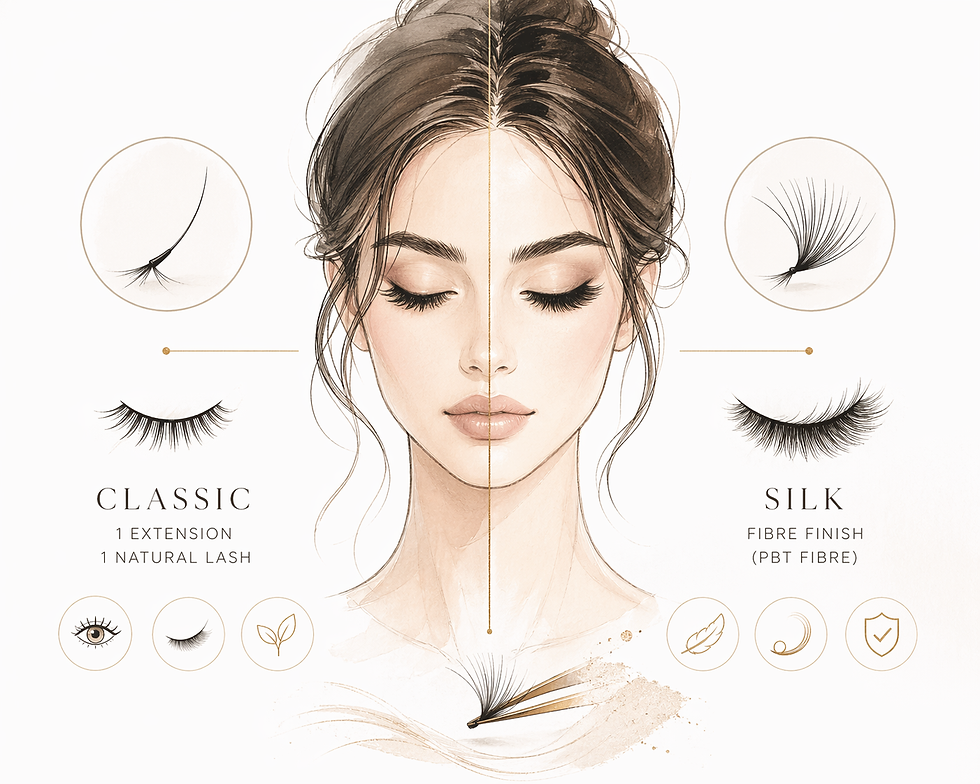
Clients often say they want "silk versus classic" lashes, unknowingly comparing two completely different categories. This fundamental misunderstanding stems from inconsistent industry terminology and marketing that treats these terms as if they're direct alternatives.
Classic refers to the application technique—specifically, the method of applying one extension to each natural lash in a 1:1 ratio. Meanwhile, silk describes the fibre finish, texture, or collection label used by lash brands. The confusion deepens because many clients use "silk" to describe the soft, fluffy result they want rather than understanding it as a material specification.
Professional lash technicians at Eyelash & Eyebrow Haus by Glamorous Lashes London frequently encounter this consultation challenge, where clients arrive requesting "classic silk lashes" without realising they're mixing technique and material terminology.
What Classic Actually Means: One Extension, One Natural Lash

Classic lash extensions follow a straightforward principle: each individual extension attaches to a single natural lash. This 1:1 application method creates a clean, separated appearance that mimics the effect of high-quality mascara on naturally long lashes.
Why Classic Uses Thicker Diameters (0.10-0.20mm)
Classic lashes require thicker diameters precisely because they work alone. Professional guidance consistently places classic-friendly diameters between 0.10mm and 0.20mm, with 0.10mm to 0.15mm representing the everyday classic range. The 0.18mm to 0.20mm diameters mark the upper limit for safe classic application without overloading natural lashes.
These substantial diameters provide the weight and presence needed to create definition when only one extension occupies each natural lash. Anything thinner would appear sparse and fail to deliver the mascara-like enhancement clients expect from classic sets.
The Natural, Separated Look Classic Creates
The classic technique produces a distinctly defined finish where each lash stands individually. This separation creates an elegant, understated enhancement that appears natural while providing noticeable length and curl. Classic suits clients who already possess naturally fuller lash lines and prefer subtle sophistication over dramatic volume.
However, classic limitations become apparent on sparse or uneven natural lash lines. Since the technique can only place one extension per existing natural lash, gaps in the lash line remain visible, and overall density stays limited by what nature provided.
Decoding 'Silk' Lashes: PBT Fibres, Not Real Silk

Despite the name, modern "silk" lash extensions contain no actual silk fibres. Professional lash extensions—regardless of whether they're marketed as silk, faux mink, or cashmere—are manufactured from synthetic PBT (Polybutylene Terephthalate) materials.
Why the Industry Uses Synthetic PBT Instead of Silk
PBT fibres offer superior performance characteristics that real silk simply cannot match. These synthetic materials provide exceptional curl retention, remaining perfectly shaped throughout the 6-8 week wear cycle. PBT lashes are also lightweight, comfortable, and hypoallergenic, making them suitable for clients with sensitive eyes.
Real silk would be impractical for lash extensions due to its tendency to lose curl when exposed to moisture, steam, or humidity. The bathroom environment alone would compromise real silk lashes within days of application.
How Brands Differentiate 'Silk' Through Finish and Taper, Not Material
Lash manufacturers create "silk" collections by adjusting taper, finish, and flexibility rather than changing base materials. Some brands market silk as semi-matte and naturally textured, while others describe silk lashes as firmer and shinier than their mink-style alternatives.
This inconsistent terminology across suppliers explains why clients cannot reliably book by the word "silk" alone. The actual characteristics depend entirely on the specific brand's interpretation and manufacturing specifications, not universal silk standards.
When Clients Want 'Silk' but Need Volume: The Consultation Reality

Professional consultations frequently reveal a disconnect between what clients request and what they actually require. Many clients arrive asking for "silk classics" while showing reference photos of soft, fluffy, dense lash sets that are technically impossible to achieve with classic application methods.
Why Soft, Fluffy Looks Require Finer Lashes (0.03-0.07mm)
The wispy, textured appearance clients associate with "silk" typically requires ultra-fine extensions ranging from 0.03mm to 0.07mm in diameter. These delicate fibres can be fanned and layered to create the soft, airy effect that classic's single thick lashes cannot replicate.
Volume techniques use multiple fine extensions in carefully crafted fans, applying 2D to 6D fans (or higher) to each natural lash. This approach achieves the density and texture clients envision when they describe wanting "silk lashes."
Hybrid and Russian Volume for Fuller Coverage
Hybrid techniques combine classic single lashes with volume fans, creating dimensional texture and increased fullness without full volume's intensity. Russian volume uses exclusively fine fibres in fans, maximising density and achieving the fluffiest possible result.
These techniques excel at covering sparse areas, filling gaps in natural lash lines, and creating the soft, feathery appearance that many clients incorrectly attribute to material choice rather than application method.
How Eye Shape and Natural Lash Density Affects Choice
Eye shape and existing lash density play crucial roles in technique selection. Clients with naturally sparse lashes benefit tremendously from volume techniques that can place multiple extensions where classic would leave noticeable gaps.
Similarly, clients with hooded eyes or deep-set eyes often require volume techniques to create sufficient presence and impact. Classic extensions may disappear entirely under hooded lids, while volume fans provide the necessary projection and fullness.
Choosing Your Technique: Classic, Hybrid, or Russian Volume

Selecting the appropriate lash extension technique requires honest assessment of natural lash conditions, realistic goal-setting, and consideration of maintenance preferences. The decision process involves three key evaluation areas.
1. Assess Your Natural Lash Line
Full, evenly distributed natural lashes suit classic applications beautifully, as the 1:1 ratio enhances existing density without overwhelming natural lash health. Sparse or patchy lash lines benefit from hybrid or volume techniques that can strategically add density where needed most.
Natural lash strength also influences technique choice. Fine, weak natural lashes cannot safely
support thick classic extensions but can comfortably wear multiple ultra-fine volume fibres that distribute weight more effectively.
2. Define Your Desired Look
Natural enhancement with definition aligns perfectly with classic techniques and their clean, separated finish. Soft, fluffy, Instagram-worthy lashes require volume methods to achieve the desired density and texture.
Dramatic, full coverage demands Russian volume applications with high fan counts, while textured, dimensional looks suit hybrid approaches that blend classic and volume elements strategically throughout the lash line.
3. Consider Maintenance and Longevity
Classic lashes generally require infills every 2-3 weeks and represent the most affordable option with shorter application times. Volume sets often appear fuller for longer periods between appointments due to their higher extension count, though they require more time and investment initially.
All techniques follow the natural lash growth cycle, with extensions shedding as natural lashes complete their 6-8 week lifecycle. However, volume sets may maintain their appearance more gracefully as individual fans shed, since multiple extensions remain even when some are lost.
FAQs
What are classic lashes made of?
Classic lashes are usually made from synthetic PBT fibres, not natural silk. “Classic” refers to the application technique, where one extension is applied to one natural lash, rather than the material itself.
How long do silk eyelashes last?
Silk lashes usually last in line with the natural lash cycle, with most clients needing infills every 2 to 3 weeks and full shedding happening over roughly 6 to 8 weeks. Retention depends just as much on aftercare and your natural lash cycle as it does on the lash type itself.a
What lash styles work with silk lashes?
Silk style lashes can be used across different lash sets depending on the finish, diameter, and brand range. In practice, clients asking for a soft silk look are often better suited to hybrid or Russian volume rather than a traditional classic set.
Are silk eyelash extensions better?
Not necessarily. Silk lashes are not automatically “better” than classic lashes because they are not direct alternatives. The better choice depends on the look you want, your eye shape, and your natural lash density.
Why do people ask for classic lashes but end up choosing Russian volume?
Because many clients use “silk” to describe a soft, fluffy result, when classic lashes create a more separated, defined look. If you want fuller, softer coverage, Russian volume is often the better match.
Book Your Consultation at Eyelash & Eyebrow Haus by Glamorous Lashes London for the Perfect Match

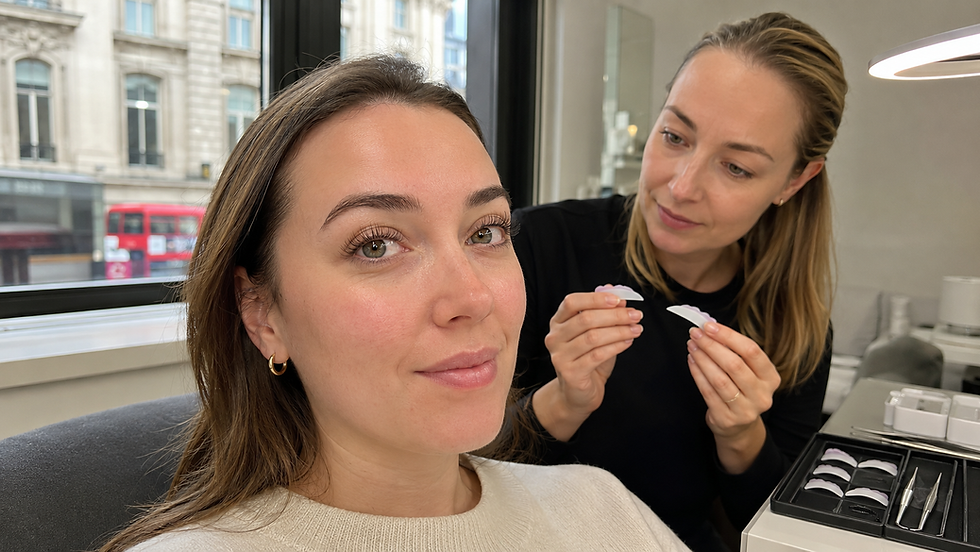
Professional consultation eliminates the guesswork from lash extension selection by evaluating individual eye shape, natural lash condition, lifestyle factors, and aesthetic goals. Experienced technicians can demonstrate different techniques, explain realistic outcomes, and recommend the approach most likely to deliver satisfaction.
During consultation, bring reference photos that capture the specific look desired rather than requesting technique names or material types. This visual approach ensures clear communication and helps technicians select appropriate methods regardless of terminology confusion.
The consultation process also addresses aftercare requirements, maintenance schedules, and long-term lash health considerations. Understanding these factors upfront prevents disappointment and ensures realistic expectations for the chosen technique.
Book your personalised lash consultation with the award-winning technicians at Eyelash & Eyebrow Haus by Glamorous Lashes London to discover which technique will best achieve your perfect lash look.


Comments